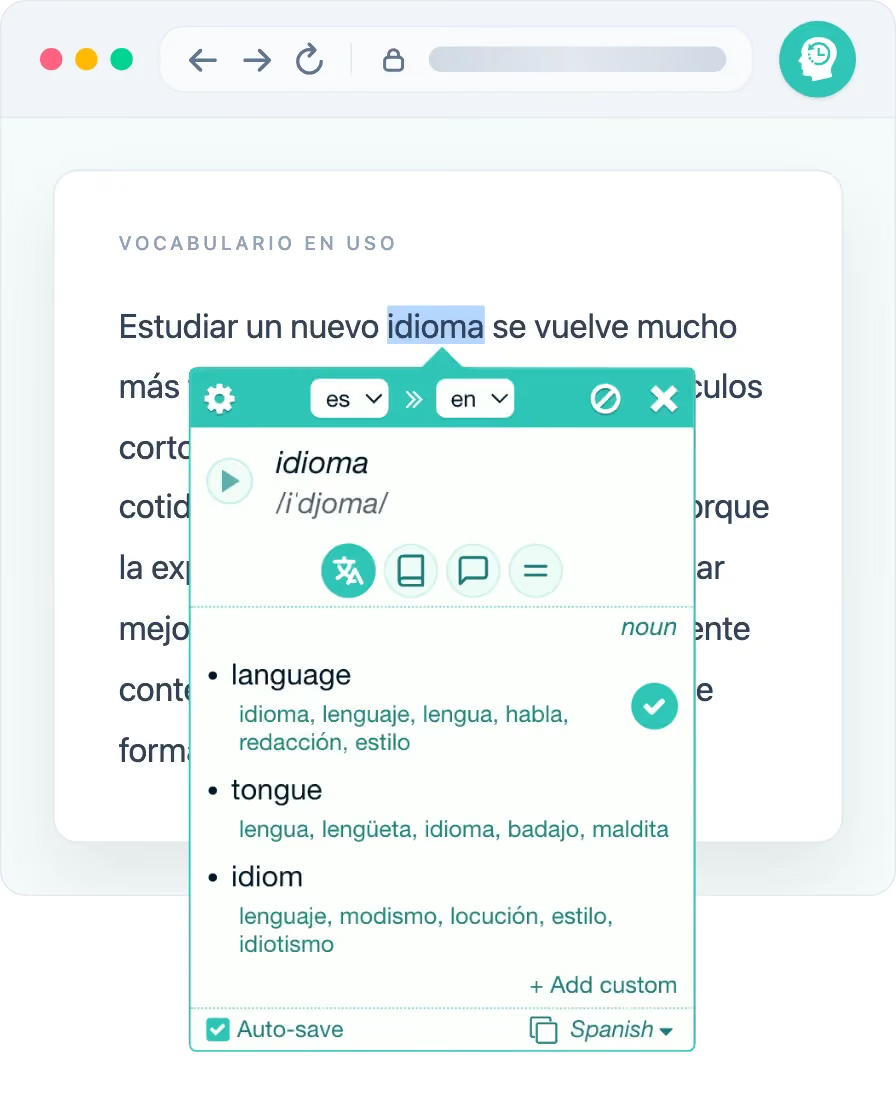
See how Spanish writing, pronunciation and grammar shape what you need to notice.
Writing and sound
Spanish spelling gives reliable clues to pronunciation, and written accents show when stress departs from the default pattern. Regional sounds are part of the language: a word such as “gracias” is not pronounced identically everywhere.
Grammar and usage
Gender and agreement shape noun phrases, while extensive verb endings often make subject pronouns unnecessary. Learners also meet contrasts such as ser/estar and regional choices among tú, vos and usted.
What to notice as a learner
Store nouns with their article (la mano, el problema) and verbs inside a complete example. Comparing ser with estar or tú with vos in real sentences is more useful than relying on a simplified rule.

 Get it on Google Play